Facultad de Ciencias Contables, Vol. 4, 2025, elocation-id: eamr.v4a01.2025 | ISSN-e: 2805-8658
Artículo Original de Investigación

Contribution of Audit Committee Characteristics to the Corporate Governance Practices of Regulatory Authorities in Tanzania: Mediating Role of Audit Committee Effectiveness
Contribución de las características del comité de auditoría a las prácticas de gobernanza corporativa de las autoridades reguladoras en Tanzania:
papel mediador de la eficacia del Comité de Auditoría
Habibu Suluo1
https://orcid.org/0009-0002-8169-4886
hsuluo@gmail.com
Gwahula Raphael1
https://orcid.org/0000-0001-6153-0433
gwahulagr@gmail.com
Saganga Mussa Kapaya1
https://orcid.org/0000-0003-3567-047X
kapaya.saganga@gmail.com
https://doi.org/10.22209/amr.v4a01.2025
elocation-id: eamr.v4a01.2025
Recibido: diciembre de 2024.
Aceptado: mayo 28 de 2025.
CÓmo citar: Suluo, H., Raphael, G. y Kapaya, S. (2025). Contribution of Audit Committee Characteristics to the Corporate Governance Practices of Regulatory Authorities in Tanzania: Mediating Role of Audit Committee Effectiveness. Accounting and Management Research, 4, eamr.v4a01.2025. https://doi.org/10.22209/amr.v4a01.2025
Abstract
This study examines the contribution of audit committee characteristics to the corporate governance practices of regulatory authorities in Tanzania; focusing on the mediating role of audit committee effectiveness. The research aims to explore how audit committee characteristics such as independence, financial expertise, size, and frequency of meetings, influence corporate governance practices, and whether audit committee effectiveness mediates this relationship. A quantitative research approach was used, with data collected through an online structured survey questionnaire from board members, management, accountants, and auditors of regulatory authorities. Out of 300 questionnaires sent, 241 were collected, yielding a high response rate of 80,3%, ensuring robust data for analysis, conducted using Jamovi software. The results show that audit committee characteristics significantly enhance corporate governance practices, improving financial reporting, accountability, and oversight roles of audit committees. Independence, financial expertise, and a diverse mix of skills are essential to strengthen governance and reduce conflicts of interest. In addition, the study finds that audit committee effectiveness partially mediates the relationship between audit committee characteristics and corporate governance practices, implying that effective audit committees translate structural characteristics into improved governance outcomes. The theoretical and managerial implications highlight the importance of audit committee structure and operational effectiveness in promoting corporate governance practices. These findings suggest that regulatory authorities in Tanzania should prioritize selecting audit committee members based on financial expertise, and member independence. The study recommends that Tanzanian policymakers revise audit committee guidelines and consider the introduction and implementation of the national corporate governance code to standardize corporate governance practices across the sectors. Future research could extend this study to other regions and industries, to examine additional audit committee characteristics, and use a longitudinal approach to gain deeper insights into governance improvements over time.
Keywords: Audit Committee Characteristics, Corporate Governance Practices, Audit Committee Effectiveness, Regulatory Authorities.
JEL Classification: M41, M42, G34
Resumen
Este estudio examina la contribución de las características del comité de auditoría en las prácticas de gobierno corporativo de las autoridades reguladoras en Tanzania; centrándose en el papel mediador de la efectividad del Comité de Auditoría. La investigación tuvo como objetivo explorar cómo las características del Comité de Auditoría, como la independencia, la experiencia financiera, el tamaño y la frecuencia de las reuniones, influyen en las prácticas de gobierno corporativo, y si la efectividad del comité de auditoría media esta relación. Se utilizó un enfoque de investigación cuantitativa, con datos recopilados a través de un cuestionario de encuesta estructurada en línea de miembros de la junta directiva, administración, contadores y auditores de las autoridades reguladoras. De los 300 cuestionarios enviados, se recopilaron 241, lo que arrojó una alta tasa de respuesta del 80,3%, lo que garantiza datos sólidos para el análisis, que se realizó utilizando el software Jamovi. Los resultados muestran que las características del Comité de Auditoría mejoran significativamente las prácticas de gobierno corporativo, fortaleciendo los informes financieros, la rendición de cuentas y las funciones de supervisión de los comités de auditoría. La independencia, la experiencia financiera y una combinación diversa de habilidades son esenciales para fortalecer la gobernanza y reducir los conflictos de intereses. Además, el estudio encuentra que la efectividad del Comité de Auditoría media parcialmente la relación entre las características del Comité de Auditoría y las prácticas de gobierno corporativo, lo que implica que los comités de auditoría efectivos traducen las características estructurales en mejores resultados de gobierno. Las implicaciones teóricas y gerenciales resaltan la importancia de la estructura del Comité de Auditoría y la efectividad operativa en la promoción de prácticas de gobierno corporativo. Estos hallazgos sugieren que las autoridades reguladoras en Tanzania deberían priorizar la selección de los miembros del Comité de Auditoría con base en la experiencia financiera y la independencia de los miembros. El estudio recomienda que los formuladores de políticas de Tanzania revisen las directrices del Comité de Auditoría y consideren la introducción e implementación del código nacional de gobierno corporativo para estandarizar las prácticas de gobierno corporativo en todos los sectores. Las investigaciones futuras podrían extender este estudio a otras regiones e industrias, para examinar características adicionales del comité de auditoría y utilizar un enfoque longitudinal para obtener conocimientos más profundos sobre las mejoras de gobierno a lo largo del tiempo.
Palabras clave: Características del Comité de Auditoría, Prácticas de Gobierno Corporativo, Efectividad del Comité de Auditoría, Autoridades Reguladoras.
Introduction
The financial crises of the early 2000s involving large companies such as Enron and WorldCom of the United States of America (USA) raised serious concerns about the lack of qualifications in financial reporting and the inability of auditors to detect management collusion and fraud (Olojede et al., 2020). In the context of corporate governance, where ownership and management are often separated, conflicts of interest arise between principals (owners) who want to maximize profits and agents (management) who may want to maximize personal benefits. The importance of audit committees (ACs) as an organizational monitoring tool is highlighted by this “agency problem” (Mnzava, 2023). By reducing disputes arising from these agency contacts, ACs reduce agency costs, or the costs associated with monitoring management (Kyere & Ausloos, 2021; Ezhilarasi, 2019).
In the United States, following the Enron and WorldCom scandals, the Sarbanes-Oxley (SOX) Act of 2002 mandated enhanced corporate governance protocols and strengthened the function of audit committees in overseeing financial reporting (De Haes et al., 2019). The Sarbanes-Oxley Act of 2002 raised regulatory standards for corporate transparency and accountability in response to scandals such as Tyco, WorldCom, and Enron in the early 2000s, thus emphasizing the need for strong corporate governance (Ashfaq & Rui, 2019; Al-Ahdal & Hashim, 2022). Governance rules, such as those derived from the SOX Act of 2002, aim to protect owners by enhancing management oversight (Castrillón, 2009) and promoting responsibility and openness in corporate operations (Wu et al., 2022). Corporate governance in the United Kingdom (UK) emerged in the 1990s, initiated by the Cadbury Report of 1992, which provided guidelines for financial reporting and accounting, focusing on operational effectiveness and efficiency, reliability of financial reporting, and compliance with legislation.
Corporate governance includes policies, procedures, and practices that create an open and compliant culture within an organization. National codes often follow the ‘comply or explain’ principle, which gives organizations some leeway in meeting governance standards and emphasizes disclosure in the event of non-compliance, although corporate governance frameworks have gained popularity in developing countries (De Haes et al., 2019). With the increase in corporate failures that have challenged the legitimacy of governance systems, the role of ACs in reducing agency conflicts has expanded (Jamil, 2020). Through organizations such as ACs, Tanzania’s regulatory framework for public sector enterprises (PSEs) supports corporate governance, with boards monitoring performance and compliance in line with national objectives. However, Tanzania does not yet have a national corporate governance code, which limits the consistency of governance across the public and private sectors. Tanzania’s public sector enterprises are subject to specific requirements, including the Ministry of Finance’s Audit Committee Guide (2019) and the Treasury Registrar’s Board Charter Guidelines (2022). Tanzania’s Controller and Auditor General (CAG) has noted that several regulators and public organizations are operating without boards, compromising accountability and governance (CAG, 2021; CAG, 2022).
The structure of an audit committee, including its independence, expertise, size, and frequency of meetings, influences its effectiveness in corporate governance (Vitolla et al., 2020; Almaqtari et al., 2020). Research suggests that successful audit committees enhance transparency by strengthening internal controls, refining financial reporting, and reducing auditrelated costs (Mnzava, 2023; Madhurangi & Abeygunasekera, 2021). The principal-agent relationship in Tanzanian public governance, where government officials act as principals who rely on management for service delivery, is elucidated by the agency theory. Agency theory emphasizes the mitigation of agency problem through audit committee monitoring (Panda & Leepsa, 2017). Conflicts between the interests of management and owners lead to agency problems and associated agency costs such as monitoring and opportunity costs (Jensen & Meckling, 1976); therefore, the audit committee is expected to mitigate these conflicts and agency problems.
Resource dependence theory posits that advisory committee members contribute significant resources to the organization, including expertise, experience, and external networks, while agency theory has mostly focused on mitigating internal conflicts (Pfeffer & Salancik, 1978). Consequently, the incorporation of external knowledge enhances governance and expands the advisory function of audit committees (Panda & Leepsa, 2017). By promoting openness and strengthening compliance, ACs in Tanzania can strengthen governance frameworks, especially in public institutions, by combining agency theory with resource dependence theory, which ultimately improves governance effectiveness and public trust. Although Tanzania does not have a national corporate governance code, the Ministry of Finance and the Office of the Treasury Registrar have issued compliance guidelines for public organizations to improve audit committee effectiveness. Tanzania faces difficulties as audit committee inefficiencies persist in public sector organizations (Millinga & Naho, 2022), although effective corporate governance has been shown to have positive economic consequences internationally. Ineffective audit committees hinder governance by failing to manage agency conflicts between management as agents and government as owners (CAG, 2022).
Robust governance frameworks are facilitated by effective audit committees within regulatory bodies, which enhance enforcement and compliance among regulated entities. Enhancing audit committee effectiveness (ACE) within regulatory agencies is expected to strengthen corporate governance standards in both public and private companies. This perspective is grounded in agency theory, which emphasizes the monitoring function of audit committees. Previous studies have investigated ACE in several contexts, including regulatory agencies (Maggetti & Papadopoulos, 2018), performance management (Bjurstrøm, 2020), and earnings management (Waweru, 2018). This study seeks to extend agency theory by incorporating the advisory role of audit committees from resource dependence theory, thus providing a more thorough understanding of the influence of audit committees on corporate governance practices within Tanzanian regulatory bodies. This study addresses a research gap on ACE in Tanzanian regulators. The objectives include examining the influence of audit committee characteristics (ACC) on audit committee effectiveness (ACE), the impact of ACC on corporate governance practices, and the mediating role of ACE in these relationships. To improve audit committee performance and corporate governance practices, the findings will guide policymakers on required changes, possibly directing the selection of board members for appointments based on expertise and independence rather than other subjective factors (Pfeffer & Salancik, 1978). The significance of this study goes beyond improving the legal framework and raising awareness to promote corporate governance standards in both the public and private sectors in Tanzania. The findings may encourage Tanzanian officials to amend the Public Finance Act to align it with global best practices and governance standards, and even to establish and enforce a national corporate governance code. The findings can be used to improve corporate governance in both the public and private sectors by informing decision making, action planning and training initiatives.
General Objective
The general objective of this study is to examine the contribution of audit committee characteristics to the corporate governance practices of regulatory authorities in Tanzania, focusing on the mediating effect of the audit committee effectiveness.
Specific Objectives
The specific objectives of this study are:
- To determine the effect of audit committee characteristics on the corporate governance practices of regulatory authorities in Tanzania.
- To determine the mediating effect of audit committee effectiveness (ACE) on the relationship between audit committee characteristics (ACC) and the corporate governance practices (CGP) of regulatory authorities in Tanzania.
Literature Review
This section includes conceptual definitions, a theoretical literature review, an empirical literature review, identification of a research gap, and a conceptual framework.
Conceptual Definitions
Audit Committee
In the public sector, audit committees are essential to corporate governance standards by providing board-level oversight, primarily through independent membership (IIA, 2014). Al-taee and Flayyih (2022) assert that these committees oversee the financial reporting process, appoint auditors, and ensure the implementation of internal and external audit findings. Often established by the board of directors, the audit committee assists the board in its governance responsibilities by overseeing audit activities, evaluating internal controls, and supervising management in the preparation of financial statements (Azizah & Nurcahyani, 2020). In response to fraud cases, the audit committee concept was established, with the McCain and Robbins fraud case of 1939 serving as an important milestone in its development in the United States. As a result, the U.S. Securities and Exchange Commission (SEC) initiated measures to curb financial misconduct by requiring all companies listed on the New York Stock Exchange (NYSE) to hire independent auditors (Namakavarani et al., 2021). In the wake of notable corporate collapses that revealed deficiencies in accounting accuracy and oversight, audit committees became increasingly important in both the United Kingdom and the United States (Akwenye et al., 2016).
Audit Committee Effectiveness
Audit committee effectiveness (ACE) is crucial in assessing the ability of an audit committee to oversee financial management and audit procedures, thereby ensuring sound corporate governance standards (Tumwebaze et al., 2022; Chan et al., 2021; Lin, 2018). The audit committee of a public sector organization often signifies strong governance practices as it helps in achieving strategic objectives (Dzomira, 2020; Millinga & Naho, 2022). The effectiveness of audit committees improves the quality of financial reporting and the reliability of audited financial statements (BRC, 1999). The independence, financial expertise, size, and meeting frequency of the audit committee are critical attributes of audit committee effectiveness (ACEs) (Kwakye et al., 2018; Bananuka et al., 2018). Audit committee financial expertise (ACFE), audit committee size (ACSZ), audit committee independence (ACIND), and audit committee meeting frequency (ACFM) are often analyzed in ACE metrics (Agyei-Mensah, 2019; Al-Okaily & Naueihed, 2019). DeZoort et al. (2002) assert that an effective audit committee consists of competent individuals who protect the interests of shareholders or firm owners by ensuring accurate financial reporting and risk management. This study uses agency theory as a basic framework, in which the committee monitors management to protect the interests of the principals, and resource dependence theory, which links firms to external resources and enhances reputation (Pfeffer & Salancik, 1978). In addition, agency theory explains the role of the audit committee within the principal-agent relationship (Raimo et al., 2020).
Corporate Governance
While there is no universally accepted definition of corporate governance, it typically refers to the framework that governs the relationships and responsibilities among an organization’s stakeholders, including shareholders, management, employees, suppliers, and government entities. This concept addresses issues arising from the principal-agent relationship, where managers and owners (shareholders) may have different objectives. Cadbury (1992) defines corporate governance as the structure that governs the operation of organizations. This concept has been used extensively in subsequent studies. In the wake of major corporate collapses such as Enron and WorldCom in the United States, corporate governance has become increasingly important, leading to the establishment of certain standards. In the United Kingdom, landmark reports such as the Cadbury (1992) report established standards for financial reporting, accountability and directors’ remuneration. In 1999, the Organization for Economic Cooperation and Development (OECD) issued guidelines that further clarified global corporate governance rules. Effective corporate governance involves structured policies, transparent management, and enhanced accountability, all of which seek to mitigate agency conflicts and align stakeholder interests with organizational activities.
Corporate Governance Practices
Corporate governance procedures refer to the methodologies employed to evaluate the management and operation of a business (Wondem & Batra, 2019). They are oversight mechanisms established to address institutional issues and ensure that management decisions prioritize the best interests of the entity (Kengatharan & Tissera, 2019). The implementation of effective corporate governance standards significantly increases the value of the firm when integrated with the core strategy of the firm (Gillani et al., 2018). Gillani et al. (2018) assert that corporate governance procedures are a focal point, as scholars use several elements to measure them within each institution. The 2014 World Bank Framework for Good Corporate Governance Practices for State-Owned Enterprises identifies ownership structure, legal and regulatory considerations, financial management protocols, performance tracking and accountability methods, transparency and disclosure mandates, and board and committee-related issues as examples of effective corporate governance practices (Adebayo & Ackers, 2022). Adebayo and Ackers (2022) argued that the framework is one of the two globally recognized factors influencing good corporate governance practices in public companies, along with the OECD Guidelines for Corporate Governance in Public Entities. The definition of corporate governance practices proposed by Wondem & Batra (2019) was used in this study as it preserves the essence of the adopted term while substituting ‘mechanisms’ for practices, thus illustrating the intended meaning.
Regulatory Authorities
Regulatory authorities, also known as independent regulatory agencies, are public sector entities, that are structurally disaggregated and entrusted with a specialized range of regulatory tasks, including licensing, standard setting, monitoring, conformity assessments, rule refinement, and sanctioning of non-compliant regulated service providers (Maggetti et al., 2022). In Tanzania, regulatory authorities are established by specific legislation to regulate and ensure fair practices, safety, and economic performance in the provision of service for a particular industry or sector, and in compliance with national policies and industry standards. The objectives of regulatory bodies can be grouped into four main categories: to safeguard service providers’ investments in service delivery; to protect the rights of consumers; to improve the efficiency of service delivery; and to regulate the behaviors of service providers and promote fair competition (Bu et al., 2022). This study has adopted Maggetti et al. (2022) definition of regulatory authorities as the researcher was not aware of any other literature on regulatory authorities with a better definition other than the “Introduction to the Handbook of Regulatory Authorities” written by Maggetti et al. (2022).
Theoretical Literature Review
Agency theory and resource dependence theory serve as the basis for the theoretical framework of this study, which helps to define the research objectives and hypotheses.
Agency Theory
In business, agency theory explains the relationship between principals (owners) and agents (managers). Agency theory, which has its roots in the writings of early economists such as Adam Smith, addresses the difficulties of balancing the interests of principals and agents. Agents are given decision-making authority by principals and should ideally act in the principal’s best interests. However, conflicting objectives, knowledge asymmetries, and different risk tolerances cause problems. Jensen and Meckling (1976), who are the two of the main proponents of agency theory, focused on these agency problems and the associated agency costs such as commitment, residual costs, and monitoring. Corporate governance practices are improved by the frequent use of procedures such as internal and external audits to control the agency’s problems. The agency theory categorizes agency problems into three types:
- Type I (Principal-Agent): The focus here is on monitoring agents to act in owners’ interests.
- Type II (Principal-Principal): Conflict between major and minor shareholders.
- Type III (Principal-Creditor): Arises from risky decisions affecting creditors.
This study focuses on Type I, which addresses the fundamental problems of the principal-agent relationship, including knowledge gaps, separation of ownership and control, and moral hazard. According to this view, the audit committee can mitigate these conflicts by implementing effective monitoring procedures that reduce agency costs and protect shareholders’ interests.
Resource Dependence Theory
Pfeffer and Salancik (1978) developed a resource dependence theory, which emphasizes the need for organizations to rely on external resources for their continued operation. The idea emphasizes the interdependence of firms with their external environment and the importance of external resources, including money and expertise, for their long-term viability. Audit committees and the board of directors are essential for accessing and utilizing these resources. Resource dependence theory suggests that audit committees facilitate transparent communication with external stakeholders, enhance reputation, and provide access to external support and advice. Directors’ experience, connections, and reputational capital enhance the organization’s governance practices by facilitating resource acquisition and promoting informed decision making.
Synthesis of Agency Theory and Resource Dependence Theory
The audit committee’s dual function of monitoring, according to agency theory, and advising, according to resource dependence theory, works in tandem. Resource dependence theory emphasizes the audit committee’s advisory role in acquiring external resources and knowledge, while agency theory describes the committee’s role in monitoring management and mitigating conflicts of interest. This integrated perspective suggests that a balanced focus on both oversight and advisory functions can enhance the effectiveness of audit committees within regulatory bodies in Tanzania. According to agency theory, an audit committee with experience and robust external linkages, as suggested by resource dependence theory, can enhance the alignment of management activities with shareholder interests.
Empirical Literature Review
Audit Committee Characteristics and Corporate Governance Practices
The study conducted by Alkilani et al. (2019), analyzed the influence of ACCs on the probability of receiving a modified audit opinion in Jordanian listed companies. The study examined data from 117 companies listed on the Amman Stock Exchange from 2012 to 2017, focusing on four ACCs: expertise, independence, frequency of meetings, and size. Logistic regression was used to assess the correlation between ACCs and modified audit opinions. The results show that only the experience of the audit committee is significantly correlated with a lower probability of a modified audit opinion, underscoring the essential role of the audit committee in improving the quality of financial reporting. The study's conclusions suggest that policymakers should prioritize enhancing audit committee skills to strengthen corporate governance and financial reporting processes in Jordan. The research conducted by Turley and Zaman (2004) evaluated the effectiveness of audit committees in mitigating corporate governance deficiencies. Although their potential benefits are widely recognized, the actual data supporting these claims are scarce and inconsistent. The paper emphasizes that research has often focused on structural elements, such as independence and expertise, rather than the operational procedures of audit committees. It argues that a comprehensive understanding of the influence of these committees on organizational behavior is essential. The analysis shows that there is no direct relationship between certain audit committee characteristics and intended governance objectives.
Ha (2022) examines the relationship between audit committee characteristics (independence, financial expertise, gender diversity, size, and meeting frequency) and corporate governance disclosure (CGD) in listed companies in Vietnam. A thorough literature review and a scorecard derived from the Vietnam-Listed Company Awards (VLCA) were used to assess corporate governance disclosure (CGD). A multiple regression analysis conducted on a sample of 210 non-financial listed companies in 2021 revealed a significant positive correlation between audit committee independence and size with corporate governance disclosure (CGD). In addition, firm size was positively correlated with CGD, suggesting a possible relationship with capital requirements. The results provide important insights for practitioners, legislators, and regulators in formulating audit committee organization regulations. Several previous studies collectively examine the impact of audit committee characteristics (ACCs) on corporate governance outcomes, emphasizing audit views and CGD. Alkilani et al. (2019) show that audit committee expertise significantly reduces the likelihood of modified audit opinions in Jordanian listed companies, while Turley and Zaman (2004) claim that structural elements such as independence and expertise alone are insufficient to achieve effective governance outcomes. They emphasize the need to understand the operational processes and behavioral effects of audit committees. Conversely, Ha (2022) found that audit committee independence and size positively affect corporate governance disclosure in Vietnamese firms, suggesting that certain audit committee characteristics can enhance openness. Therefore, based on the above empirical reviews, the following hypothesis is formulated:
H1: Audit committee characteristics have a significant effect on corporate governance practices.
Audit Committee Characteristics and Audit Committee Effectiveness
The independence of the audit committee is essential for auditors to enhance their credibility and confidence in financial reporting, which defines an effective audit committee (Al-Hadrami et al., 2020). A study was conducted to examine the impact of specific audit committee characteristics, as defined by the Blue-Ribbon Committee (BRC, 1999), on the incidence of financial restatements. Analysis of 88 restatements and a matched control group revealed that increased audit committee independence correlated with increased activity levels and the inclusion of at least one member with financial expertise (Abbot et al., 2004). The findings corroborated the recommendations of the BRC (1999) and emphasized the essential role of effective audit committees in improving the quality of financial reporting and reducing the possibility of restatements. Furthermore, Khudhair et al. (2019) investigated the influence of governance framework on audit quality in Iraqi non-financial companies, especially in light of prominent corporate scandals. The study examines the correlation between audit quality, as assessed by the Big Five audit firms, and governance elements such as audit committee size, independence, financial sophistication of members, and meeting frequency. The results showed a positive relationship between audit quality and the proportion of non-executive directors on the audit committee. These findings provided important insights for policymakers, researchers, and practitioners regarding the importance of audit quality and its key drivers in the Iraqi context.
Other studies have examined the influence of audit committee characteristics on financial reporting and audit quality, including research on the BRC guidelines, which indicates that increased audit committee independence, increased activity levels, and the presence of at least one financially literate member are significantly correlated with a reduced likelihood of financial restatements (Smith, 2006). This suggests that well-organized audit committees are critical to ensuring reliable financial reporting and reducing the risk of restatements. Further, Khudhair et al. (2019) examined governance mechanisms in Iraqi non-financial firms, particularly in response to corporate scandals, to understand how these mechanisms affect audit quality, measured by Big Five auditor engagement. The study finds a positive relationship between audit quality and the proportion of non-executive directors on the AC and highlights independence, expertise, and regular meetings as critical determinants of AC effectiveness in promoting high-quality audits. Taken together, these findings underscore the importance of specific AC characteristics in enhancing both financial reporting quality and audit effectiveness. Therefore, based on the above empirical reviews, the following hypothesis is formulated:
H2: Audit committee characteristics have a significant effect on audit committee effectiveness.
Audit Committee Effectiveness and Corporate Governance Practices
Lary and Taylor (2012) examine the relationship between the effectiveness of audit committees in Australian listed companies between 2004 and 2009 and the audit committee characteristics, in particular, independence, competence, and diligence. Using multiple regression analyses, the study found that while greater diligence is associated with greater audit committee independence, greater audit committee independence and competence were correlated with fewer financial restatements, suggesting improved integrity of entities' financial statements. By examining these dynamics outside of North America and Europe, the research provides a fresh perspective and integrates characteristics that are often examined separately to provide a holistic model of corporate governance practices. A unique feature of the study was its measurement of audit committee competence, which took into account the combined financial expertise and industry expertise of the members of audit committees. Bradbury et al. (2006) examined the relationship between corporate governance practices and accounting quality in Singapore and Malaysia, where earnings manipulation was not of significant concern. The study found that larger sizes of audit committees and more independence of audit committees were associated with lower levels of abnormal working capital accruals, especially those that were earnings-enhancing. This suggests that audit committees play a crucial role in maintaining the quality of financial reporting by deterring earnings management. However, the effectiveness of the audit committees depends on the independence of all their members.
In addition, the studies by Lary and Taylor (2012) and Bradbury et al. (2006) examine how audit committee effectiveness (ACE) affects corporate governance practices, focusing in particular, on the audit committee characteristics; independence, competence, and diligence. Lary and Taylor’s study of Australian companies between 2004 and 2009 found that greater audit committee diligence was significantly associated with audit committee independence, while audit committee independence and competence were correlated with fewer financial restatements, suggesting the importance of the committee in improving the financial statements’ integrity. Notably, this study uses a unique measure of audit committee competence that combines members’ financial expertise and industry knowledge, providing a comprehensive view of corporate governance practices outside of the North American and European contexts. The Bradbury et al. (2006) study, on the other hand, looked at Singapore and Malaysia and found that more audit committee independence is significantly associated with lower levels of ab-normal working capital accruals, particularly those that increase earnings, suggesting a role for audit committees in maintaining high quality of financial reporting and deterring earnings management. However, the effectiveness of the audit committees was shown to depend on the independence of the members of the audit committees. These findings suggested that audit committees’ effectiveness is significantly associated with the members’ independence, competence, and diligence, playing a critical role in corporate governance practices by enhancing financial reporting quality and reducing the likelihood of earnings manipulation. Therefore, based on the above empirical reviews, the following hypothesis is developed:
H3: Audit committee effectiveness has a significant effect on corporate governance practices.
Mediation of Audit Committee Effectiveness on the Relationship Between Audit Committee Characteristics and Corporate Governance Practices
This study examines the contribution of audit committee characteristics to the corporate governance practices, through the mediating role of the audit committee effectiveness. The audit committee characteristics are independent variables and corporate governance practices are the dependent variable in this case. The mediating role of the audit committee effectiveness was chosen to test the relationship between audit committee characteristics and corporate governance practices to contribute to the body of knowledge and corporate governance studies on the role of audit committees in corporate governance practices. The constructs proposed for the mediation were the ones making the committee more effective, which include co-opting external experts, capacity to analyze financial statements, compliance with the Treasury Registrar’s Board Charter Guidelines of 2022, audit committees holding meetings with the Controller and Auditor General in the absence of management, and conducting the annual review of internal audit plans. There are several studies conducted on audit committee effectiveness; however, the researcher is not aware of a study that used the mediating role of audit committee effectiveness between audit committee characteristics and corporate governance practices. Therefore, based on the given explanation, the following hypothesis was developed:
H4: Audit committee effectiveness significantly mediates the relationship between audit committee characteristics and corporate governance practices
Research Gap
After reviewing the literature, this study has identified the existence of a contextual gap in the mediating role of the audit committee effectiveness. Most of the previous studies that were conducted on audit committee characteristics and audit committee effectiveness looked at the characteristics affecting audit committee effectiveness in private firms. In addition, the researchers have not been aware of any study conducted on the contribution of audit committee characteristics to corporate governance practices through the mediating role of audit committee effectiveness in the context of regulatory authorities in Tanzania. Thus, this study expands the previous understandings of the research in the context of regulatory authorities to fill the contextual gap.
Conceptual Framework
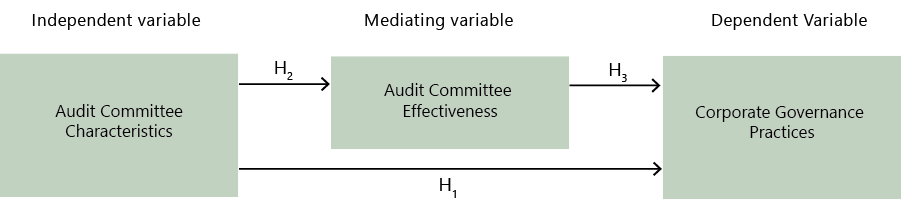
The following hypothesized model was built based on the association between the variables used in this study and the literature review, as shown in Figure 1.
Figure 1. Hypothesized Model
Source: Researcher development based on the synthesis of literature (2024)
The hypotheses summarised below are based on the general objective of this study, the findings from the above literature review, and the hypothesized model. Therefore, the four hypotheses of this study are as follows:
H1: Audit committee characteristics have a significant effect on corporate governance practices.
H2: Audit committee characteristics have a significant effect on audit committee effectiveness.
H3: Audit committee effectiveness has a significant effect on corporate governance practices.
H4: Audit committee effectiveness significantly mediates the relationship between audit committee characteristics and corporate governance practices
Methodology
This study describes the research method, philosophy, approach, design and strategy, study area, population and sample size, sampling procedure, research instrument, data collection method, reliability and validity, data analysis, and ethical considerations.
Research Method
The research used a quantitative methodology to evaluate hypotheses and illustrate causal relationships through statistical and computational techniques (Maxwell, 2016). The investigation included hypotheses that anticipated relationships between independent and dependent variables. A survey questionnaire was used to collect data, which provided quantifiable, standardized data suitable for analysis (Creswell & Creswell, 2018).
Research Philosophy
The study was based on positivist epistemology, which prioritizes objective and indisputable facts about causal relationships between variables (Leedy et al., 2021). The positivist methodology was chosen to collect and examine empirical data and to evaluate hypotheses regarding the relationships between independent and dependent variables. Hypothesis testing was used to generate initial hypotheses for observed behaviours, which were subsequently validated by empirical evidence (Rehman & Alharthi, 2016).
Research approach
A deductive approach, characteristic of quantitative research, was used to validate or invalidate hypotheses (Creswell & Creswell, 2018). This approach allows researchers to utilize literature and theoretical findings to construct a conceptual framework for evaluation. The deductive approach seeks to expand or challenge established concepts and advance knowledge in ambiguous areas by emphasizing causal relationships (Neuman, 2014).
Research design and strategy
An explanatory research design was used to investigate proposed causal relationships between variables. The researcher gained insight into causal relationships by analyzing patterns in the data obtained through this design (Kassa, 2021). Quantitative information on trends, attitudes, and opinions was gathered through a survey approach. Participants were able to complete the survey on their own using self-administered questionnaires, which increased the reliability of the data and made it easier to compare responses (Creswell, 2014).
Study area, population, and sample size
The study included 18 regulatory authorities in mainland Tanzania, located at their headquarters in Arusha, Dar es Salaam, and Dodoma. Regulatory bodies were selected because they play an important role in governance and oversight in the socio-economic sectors of Tanzania (Maggetti et al., 2022). The survey included 1,196 participants, including board members, chief executive officers, managers, accountants, and auditors. A random sample of 300 participants was selected using the Taro Yamane formula  where n is the sample size, N is the population size and d is the sampling error (Uakarn et al., 2021). Using the level of precision (sampling error) of , the study sample size was established to be
 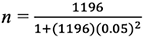 299.74 ≈ 300.
Sampling technique
Random sampling, a probability sampling method, was used to ensure that each member of the target population had an equal opportunity to be selected. This approach, which is effective for survey-based and quantitative research, was used to reduce selection bias and increase the representativeness of the sample (Etikan & Bala, 2017).
Research Instrument
The research utilized a structured survey questionnaire method, which is preferred for collecting standardized data and information from participants. Participants indicated their level of agreement with the essential items in the questionnaires, which were formulated using a 5-point Likert scale ranging from strongly disagree (Likert scale 1) to strongly agree (Likert scale 5).
Data collection method
A systematic, self-administered survey questionnaire was used to collect primary data from participants, allowing for standardized and cost-effective data collection. Closed-ended questions facilitated analysis and comparison between respondents (Saunders et al., 2019). Smartphones, tablets, laptops, and desktop computers were among the digital devices used by participants to complete the survey (Beatty et al., 2020).
Reliability and Validity
Reliability and validity are essential measurements for judgments of the quality of quantitative research in social sciences (Saunders et al., 2019). Reliability is the degree of accuracy of the research data collected and is usually referred to the extent the variables or indicators were stable and consistently measured what was supposed to be measured. Validity is the extent to which the research instrument (survey questionnaire) measured what it asserted to measure, and the results of the measurements are trustworthy. The reliability and validity tests of the research instrument were conducted.
Data Analysis
Data analysis was performed using the IBM SPSS Statistics version 26 and Jamovi Software version2.3.28. IBM SPSS Statistics, a robust statistical package, was specifically used for demographic profiles and regression analysis, while Jamovi software was specifically used for hypothesis testing. The data collected were virtually inspected to ensure that they were of good quality before data analysis was conducted. The missing data, outliers, and errors obtained during data entry were checked. Descriptive analysis and inferential analysis were conducted.
Ethical Consideration
Ethical consideration in this research was observed in this study. The main issues for consideration included avoiding data fabrication in surveys, data falsification in surveys, and plagiarism. In addition, participation in this study was voluntary and the questionnaires to all participants emphasized confidentiality in the whole process. Respondents’ voluntary participation, anonymity, and confidentiality matters were carefully and adequately observed as recommended by Saunders et al. (2019).
Results and Discussion
This section presents results of the study and the discussion of the results.
Results
Respondents Demographic Profiles
This section presents the response rate, respondents gender, age group, occupation, highest education qualifications, and working experience in years.
Response Rate
Out of the 300 questionnaires sent to the participants in 18 regulatory authorities, 241 were collected by the researcher, representing a high response rate of 80,3%. The high response rate suggests that the sample is representative and accurately reflects the target population of the study.
Respondents by Gender
A total of 241 people responded to the survey questionnarie, of whom 177 were men (73.4 percent) and 64 were women (26.6 percent). This means that men predominated the study, as shown in Table 1 below.
Table 1: Distribution of Respondents by Gender
|
Gender |
Number |
Percentage (%) |
|
Females |
64 |
26.6 |
|
Males |
177 |
73.4 |
|
Total |
241 |
100.0 |
Source: Research Data, 2024
Respondents by Age Group
Respondents were categorized into six age groups: 18-30 years, 31-40 years, 41-50 years, 51-60 years, 61-70 years and over 70 years. The age distribution shows a significant proportion of respondents, i.e. 97 (40.3 percent) were in the 41-50 age group, followed by 65 (27 percent) in the 51-60 age group and then 50 (20.7 percent) in the 18-30 age group. The remaining respondents, around 26 (12 percent), were over 61 or under 30. This suggests that most audit committee members are between the ages of 41 and 50, as summarised in Table 2 below.
Table 2: Distribution of Respondents by Age Group
|
Age Group |
Number |
Percentage (%) |
|
18-30 Years |
13 |
5.4 |
|
31-40 Years |
50 |
20.7 |
|
41-50 Years |
97 |
40.3 |
|
51-60 Years |
65 |
27.0 |
|
61-70 Years |
13 |
5.4 |
|
Above 70 Years |
3 |
1.2 |
|
Total |
241 |
100.0 |
Source: Research Data, 2024
Respondents by Work Occupation
According to the analysis, the occupations of the respondents were as follows: head/chief internal auditor 15 (6.2 percent), head/director of finance 5 (2.1 percent), internal auditor 30 (12.4 percent), accountant 49 (20.3 percent), chairman of the board 6 (2.5 percent), board member 34 (14.1 percent), director general/CEO 11 (4.6 percent) and senior manager 91 (37.8 percent). The occupation of the respondents is shown in Table 3 below.
Table 3: Distribution of Respondents by Work Occupation
|
Work Occupation |
Number |
Percentage (%) |
|
Board Chairperson |
6 |
2.5 |
|
Board Members |
34 |
14.1 |
|
Director General/CEO |
11 |
4.6 |
|
Management Staff |
91 |
37.8 |
|
Head/Chief Internal Auditor |
15 |
6.2 |
|
Head/Director responsible for Finance |
5 |
2.1 |
|
Internal Auditors |
30 |
12.4 |
|
Accountants |
49 |
20.3 |
|
Total |
241 |
100.0 |
Source: Research Data, 2024
Respondents by Highest Education Qualifications
An analysis of the respondent’s highest level of education shows that most of them, 182 (75.5%) have a Master’s or Postgraduate degree, 37 (15.4%) a bachelor’s degree, and 17 (7.1%) a PhD. In addition, only two (2) had both a diploma/advanced diploma and a CPA (T), each at 0.8 percent, while one (1) had none. Table 4 below summarises these findings.
Table 4: Distribution of Respondents by Highest Qualification
|
Highest Qualification |
Number |
Percentage (%) |
|
CPA(T) |
2 |
0.8 |
|
PhD |
17 |
7.1 |
|
Master/Postgraduate degree |
182 |
75.5 |
|
Undergraduate degree |
37 |
15.4 |
|
Diploma/Advanced Diploma |
2 |
0.8 |
|
None of the above |
1 |
0.4 |
|
Total |
241 |
100.0 |
Source: Research Data, 2024
Respondents by Working Experience in Years
In terms of work experience, many respondents, 136 or 56.4 percent, had more than 15 years of experience. There were 59 people (24.5 percent) with 10-15 years of experience and 27 people (11.2 percent) with more than 5-10 years of experience. In addition, only one respondent (0.4 percent) had up to one year’s experience, while 10 (4.2 percent) had more than one to five years’ experience. These findings suggest that regulators tend to favor senior executives, postgraduates, and those with more than 15 years of experience when selecting audit committee members. The results of the respondents’ years of experience are shown in Table 5 below.
Table 5: Distribution of Respondents by Working Experience
|
Working Experience in Years |
Number |
Percentage (%) |
|
Up to 1 year |
1 |
0.4 |
|
Above 1 year up to 3 years |
10 |
4.2 |
|
Above 3 years up to 5 years |
8 |
3.3 |
|
Above 5 years up to 10 years |
27 |
11.2 |
|
Above 10 years up to 15 years |
59 |
24.5 |
|
Above 15 years |
136 |
56.4 |
|
Total |
241 |
100 |
Source: Research Data, 2024
Reliability and Validity
Testing Assumptions of Study Variables
To ensure that the data could be analyzed using factor analysis, the data from the study was subjected to validity and reliability tests. There are four assumptions that must be met by the data for principal component analysis (PCA) to produce reliable results (Landau & Everitt, 2003). According to Landau & Everitt (2003), the four assumptions are non-existence of significant outliers, that there are many variables scored at either the ordinal or continuous level, that there is a linear relationship between the variables, and that there is adequate sampling. After analysis, the sample data collected met each of the four assumptions. A minimum sample size of 150 is required to perform PCA (Fan et al., 2016), and the 241 respondents from the sample of 300 participants for this study met the minimum criteria.
However, to ensure an accurate assessment of the internal validity and consistency of the measures employed, a reliability test was conducted. The reliability analysis was conducted to determine the Cronbach’s Alpha for each of the three construct scales, maintaining a minimum threshold of 0.6 as recommended by Gallais et al. (2017), Straub et al. (2004), and Taherdoost (2016).
Results of Reliability and Validity Tests
The 11 variables of the research instrument were subjected to factor analysis by using SPSS Statistics version 26 under the dimension reduction. It was then determined that all 11 variables had a correlation of at least 0.3 with another variable, indicating effective factoring. The Kaiser-Meyer-Olkin (KMO) was also tested in SPSS Statistics version 26 to assess sampling adequacy. The KMO measure of sampling adequacy indicates the proportion of variance in variables that could be explained by underlying factors. The KMO test results showed sampling adequacy was 0.894, which is above the minimum threshold of 0.6 (Shrestha, 2021). Bartlett's sphericity test was statistically significant (χ2 (55) = 1264, p < .001). Based on the results, PCA was considered appropriate for the 11 variables of the research instrument as presented in Table 6.
Table 6. Kaiser-Meyer-Olkin and Barlett’s Test result
|
KMO and Bartlett's Test |
||
|
Kaiser-Meyer-Olkin Measure of Sampling Adequacy. |
.894 |
|
|
Bartlett's Test of Sphericity |
Approx. Chi-Square |
1264 |
|
Degrees of freedom |
55 |
|
|
Significance |
.000 |
|
Source: Research Data, 2024
The analysis shows that the Cronbach's Alpha of the instrument was significantly higher than the required minimum of 0.6 (Gallais et al., 2017; Straub et al., 2004; Taherdoost, 2016). The alpha coefficient of the instrument ranged from 0.635 to 0.934. The audit committee effectiveness scale had an alpha coefficient of .635, the corporate governance practices scale had an alpha coefficient of .934, and the audit committee characteristics scale had an alpha coefficient of .772. Table 7 shows that the Cronbach´s Alpha coefficients for all three components met the required minimum level of 0.6.
Table 7. Cronbach´s Alpha Test Results
|
Items |
Cronbach’s Alpha |
Number of Items |
Comment |
|
Overall |
.933 |
50 |
Accepted |
|
Audit Committee Characteristics |
.772 |
22 |
Accepted |
|
Corporate Governance Practices |
.934 |
23 |
Accepted |
|
Audit Committee Effectiveness |
.635 |
5 |
Accepted |
Source: Research Data, 2024
Linearity
The relationship between the independent and dependent variables is linear. The computation of Pearson’s correlation coefficient, as shown in Table 8, validated this premise.
Table 8: Correlation Matrix
|
|
|
ACC |
ACE |
CGP |
|
ACC |
Pearson's correlation (r) |
— |
|
|
|
|
df |
— |
|
|
|
|
p-value |
— |
|
|
|
|
N |
— |
|
|
|
ACE |
Pearson's correlation (r) |
0.673*** |
— |
|
|
|
df |
239 |
— |
|
|
|
p-value |
< .001 |
— |
|
|
|
N |
241 |
— |
|
|
CGP |
Pearson's correlation (r) |
0.669*** |
0.775*** |
— |
|
|
df |
239 |
239 |
— |
|
|
p-value |
< .001 |
< .001 |
— |
|
|
N |
241 |
241 |
— |
|
Note. *** p < .001 means a result is judged as very highly |
||||
Source: Research Data, 2024
The results show there are significant positive relationships between audit committee effectiveness ACE), corporate governance practices (CGP), and audit committee characteristics (ACC). Specifically, there is a positive significant correlation coefficient of .775 between ACE and CGP. There is also a significant positive correlation coefficient of .673 between ACE and ACC. In addition, there is a significant positive correlation coefficient of .669 between ACC and CGP. The correlation coefficients suggest that there are no collinearity problems as all values are less than 0.85. Thus, the issue of multicollinearity does not arise (Hair et al., 2010).
Model Fit Measure
A Regression model fit measure, which is used to assess the extent to which a regression model predicts the relationship between independent and dependent variables, was applied in this study. Before estimating the suggested model, the researchers tested regression models individually. The following hypothesis was used for testing the significance of the overall regression model:
H0 : β1=β2=…. Βi = 0
Ha : At least one regression coefficient is ≠ 0
The regression analysis revealed the existence of a strong and significant relationship between the constructs. When the p-value is low for a corresponding F-value, for example, p<0.05 for F-value of 194, then the model is concluded to be statistically significant. The first model shows excellent fit and significant values of R (0.669), R2 (0.448), and an F-value of 194, indicating the impact of audit committee characteristics on corporate governance practices. According to the model, audit committee characteristics account for 45% of the variation in corporate governance practices. The second model, which examined the impact of audit committee effectiveness on corporate governance practices, showed a good fit and significant value of R (0.775), R2 (0.600), and an F-value of 359, indicating that audit committee effectiveness accounts for 60% of the variation in corporate governance practices. The final model showing the impact of audit committee characteristics on audit committee effectiveness had acceptable good fit values of R (0.673), R2 (0.454), and a significant F-value of 198. According to the model, audit committee characteristics account for 45% of the variation in audit committee effectiveness. These results are summarized in Table 9 below.
Table 9. Regression Model Fit Measure Summary
|
Overall Model Fit Test |
||||||
|
Model |
|
R |
R² |
Adjusted R² |
F |
P |
|
1 |
ACC predicting CGP |
0.669 |
0.448 |
0.446 |
194 |
< .001 |
|
2 |
ACE predicting CGP |
0.775 |
0.600 |
0.599 |
359 |
< .001 |
|
3 |
ACC predicting ACE |
0.673 |
0.454 |
0.451 |
198 |
< .001 |
|
ACC = Audit Committee Characteristics |
||||||
|
CGP= Corporate Governance Practices |
||||||
|
ACE= Audit Committee Effectiveness |
||||||
Source: Research Data, 2024
Hypothesis Testing
This study tested four (4) hypotheses whose results showed a direct effect (ACC ⇒ CGP) for Hypothesis 1 (H1), a component effect (ACC ⇒ ACE) for Hypothesis 2 (H2), a direct effect (ACC ⇒ CGP) for Hypothesis 3 (H3), and an indirect effect (ACC ⇒ ACE ⇒ CGP) for Hypothesis 4 (H4), and a total effect ACC ⇒ CGP. Table 10 below shows the mediation estimates and the model path estimates of the hypothesis testing. These results are summarised in Table 10 below.
Table 10. Indirect, Component, Direct, and Total Effects
|
95% C.I. (a) |
||||||||
|
Type |
Effect |
Estimate |
SE |
Lower |
Upper |
β |
z |
p |
|
Indirect |
ACC ⇒ ACE ⇒ CGP |
0.534 |
0.0603 |
0.415 |
0.652 |
0.399 |
8.85 |
< .001 |
|
Component |
ACC ⇒ ACE |
0.927 |
0.0656 |
0.799 |
1.056 |
0.673 |
14.14 |
< .001 |
|
ACE ⇒ CGP |
0.576 |
0.0507 |
0.476 |
0.675 |
0.593 |
11.35 |
< .001 |
|
|
Direct |
ACC ⇒ CGP |
0.361 |
0.0698 |
0.224 |
0.498 |
0.270 |
5.17 |
< .001 |
|
Total |
ACC ⇒ CGP |
0.894 |
0.0641 |
0.769 |
1.020 |
0.669 |
13.96 |
< .001 |
|
Note. Confidence intervals computed with method: Standard (Delta method) Note. Betas are completely standardized effect sizes |
||||||||
Source: Research Data, 2024
Therefore, Table 10 above summarizes the testing results of the four hypotheses of this study which are all supported as follows:
- Hypothesis 1 (H1) was tested to determine the effect of audit committee characteristics (ACC) on the corporate governance practices (CGP) of regulatory authorities. The results indicate that ACC significantly influences the CGP of the regulatory authorities (γ = 0.894, p<0.001). Therefore, H1 is supported.
- Hypothesis 2 (H2) was tested to determine the affect of audit committee characteristics (ACC) on audit committee effectiveness (ACE) of regulatory authorities. The results indicate that ACC significantly influences the ACE of the regulatory authority (γ = 0.927, p< .001). Therefore, H2 is supported.
- Hypothesis 3 (H3) was tested to determine the affect of audit committee effectiveness (ACE) on corporate governance practices (CGP) of regulatory authorities. The results indicated that ACE has a significant impact on CGP of regulators (γ = 0.376, p< .001). Therefore, H3 is supported.
- The mediation analysis was performed to assess Hypothesis 4 (H4) on the significance of the mediating role of audit committee effectiveness on the relationships between the audit committee characteristics and corporate governance practices of regulatory authorities. The results showed that ACE is significantly mediating the relationship between ACC and CGP (p<.001) is statistically significant (γ = 0.597, p<0.001). This suggests that audit committee effectiveness serves as a bridge between audit committee characteristics and corporate governance practices. Hence, H4 is supported.
Discussion
The findings offered excellent support for the theoretical paradigm of audit committee characteristics, audit committee effectiveness, and corporate governance practices. The study has presented that audit committee characteristics have a significant effect on corporate governance practices, thus addressing the first study objective. This study confirms and supports the previous studies that have presented a link between audit committee characteristics and corporate governance practices (Ha, 2022; Alkilani et al., 2019; Turley & Zaman, 2004). Corporate governance benefits greatly from the independence, financial expertise, size, diversity, frequency of meetings, and leadership of the audit committee. An unbiased and financially literate committee enhances oversight by ensuring transparent and accurate financial reporting while reducing conflicts of interest. Optimal committee size and diversity of experience promote a balanced decision-making process and a comprehensive understanding of risk and compliance. Proactive governance is evidenced by frequent meetings and engaged members, while effective oversight is ensured by strong leadership from the audit committee chair. Together, these attributes enhance corporate governance processes by promoting accountability, ethical behavior, and shareholder confidence.
The study’s findings also suggest that the qualities of audit committees enhance their effectiveness. This is consistent with other research that shows a significant positive correlation between the characteristics of audit committees and their effectiveness (Khudhair et al., 2019). The effectiveness of an audit committee is enhanced by its independence, financial acumen, optimal size, diverse skills, meeting frequency, commitment, and competent leadership. Members’ financial acumen facilitates interpretation of complicated reports and ensures accuracy, while their autonomy allows for unbiased review. A diverse committee promotes comprehensive and unbiased decision-making by incorporating many perspectives and experiences. A high level of commitment and engagement, coupled with regular meetings, allows the audit committee to remain proactive and responsive to emerging challenges. In addition, skilled leadership by the chair ensures that audit committee discussions are actionable and facilitate discourse. Together, these attributes enhance corporate governance practices by improving risk management, financial oversight, and compliance.
The second and final purpose of this study was to determine whether audit committee effectiveness mediates the relationship between audit committee characteristics and corporate governance practices. The results suggest that audit committee effectiveness somewhat mediates the relationship between audit committee characteristics and corporate governance practices. This study is the first empirical examination of the mediating role of audit committee effectiveness in the relationship between audit committee characteristics and corporate governance practices, specifically within the Tanzanian setting.
Theoretical Managerial Implications
The theoretical implications of these findings enhance and broaden the understanding of the contribution of audit committee characteristics to the corporate governance practices of regulatory authorities. The findings support the theoretical framework that attributes such as independence, financial sophistication, size, and frequency of meetings are essential to the effectiveness of audit committees, which are essential to robust corporate governance standards. This validates the established theory and empirical studies linking audit committee structure to governance outcomes (Ha, 2022; Alkilani et al., 2019; Turley & Zaman, 2004), emphasizing that properly structured audit committees enhance financial transparency, accountability, and ethical behavior, thereby promoting shareholder confidence and organizational integrity. Moreover, by showing that audit committee effectiveness partially mediates this relationship, the study introduces a new aspect to the theoretical framework, suggesting that audit committee characteristics not only directly affect corporate governance practices, but also influence operational effectiveness. The mediation effect, which is examined for the first time in the context of regulators in Tanzania, suggests that governance models need to account for both the direct and mediated influences of audit committee characteristics on corporate governance practices in different cultural and regulatory contexts.
Conclusion
This study significantly enhances the understanding of the interrelationships among audit committee characteristics, audit committee effectiveness, and corporate governance practices of regulators in Tanzania. By examining how key audit committee characteristics such as independence, financial expertise, size, frequency of meetings, and leadership affect corporate governance, the study confirms that these factors play a critical role in enhancing governance quality. Independent, financially literate, and well-diversified audit committees are shown to strengthen corporate governance practices through improved financial reporting, increased accountability, and effective oversight of management practices. These findings are consistent with previous research and confirm the importance of audit committee structure and composition in promoting transparency, ethical behavior, and shareholder confidence. In addition, this study shows that audit committee characteristics significantly enhance the effectiveness of the audit committee itself. A committee with the right mix of skills, commitment, and leadership is better equipped to conduct thorough financial reviews, proactively address risks, and support compliance efforts. These characteristics enable the audit committee committees to act with both independence and insight, providing objective oversight that strengthens internal controls and minimizes conflicts of interest.
A novel contribution of this study is its examination of the mediating role of audit committee effectiveness in the relationship between committee characteristics and corporate governance practices. The results suggest that audit committee effectiveness partially mediates this relationship, suggesting that the impact of committee characteristics on corporate governance is not only direct but also enhanced by the effectiveness of the audit committee’s operational functions. This finding adds a layer to the existing literature on corporate governance by highlighting the importance of operational effectiveness in translating structural characteristics into tangible governance outcomes. By empirically testing this mediating effect in the context of regulatory authorities in Tanzania, the study has bridged the contextual gap and provides valuable insights into how corporate governance practices are shaped by audit committee dynamics in the regulatory framework of the existing and emerging markets.
Overall, this study has important implications for both theory and practice. For practitioners and policymakers, the findings underscore the importance of establishing well-structured and effective audit committees as a means of strengthening corporate governance practices in the public sector entities and regulatory authorities in particular. Regulators may also consider incorporating these findings into guidelines for audit committee composition and performance standards. For researchers, this study highlights the value of examining the direct effects of audit committee characteristics and their mediated influence through audit committee effectiveness, providing new avenues for research in different cultural and regulatory contexts. Finally, this study demonstrates that audit committee characteristics and their effectiveness are integral to sound corporate governance practices, contributing to a comprehensive framework that promotes accountability, ethical standards, and stakeholder trust in different organizational contexts.
Future Research and Limitations
This study provides several insights into the contribution of audit committee characteristics to the corporate governance practices of regulatory authorities in Tanzania, but certain limitations provide opportunities for future research. First, the study was conducted in the context of regulatory authorities in Tanzania, which may limit the generalisability of the findings to other regions with different regulatory environments and governance standards. Future research could extend this work by examining the mediating role of audit committee effectiveness in other countries or across different industries to compare results and determine whether similar dynamics hold in different cultural and economic contexts.
In addition, while this study focused on core audit committee characteristics. such as independence, financial expertise, size, and frequency of meetings, there may be other influential factors that were not addressed. Factors such as committee tenure, technological sophistication, gender, and members’ use of digital audit tools may also influence audit committee effectiveness and corporate governance processes. Subsequent research can examine these additional qualities and provide a more thorough understanding of the aspects that enhance audit committee effectiveness. Finally, although the study used quantitative approaches to examine the correlations between variables, a qualitative approach, including interviews with board members, audit committee members, and regulators, could provide deeper insights into the mechanisms underlying these relationships. Future research that integrates qualitative and quantitative methodologies could more effectively elucidate the intricacies of audit committee operations and enhance understanding of how committee dynamics affect corporate governance practices.
This study provides a solid foundation for understanding the relationship between audit committee characteristics, effectiveness, and corporate governance practices; however, future research could expand its scope by examining additional contexts, variables, and research methodologies to enhance and generalize these findings.
References
Abbott, L. J., Parker, S., & Peters, G. F. (2004). Audit committee characteristics and restatements. Auditing: A journal of practice & theory, 23(1), 69-87. https://doi.org/10.2308/aud.2004.23.1.69
Adebayo, A., & Ackers, B. (2022). Comparing corporate governance practices of state-owned enterprises (SOEs) in South Africa and Singapore. Journal of Accounting and Investment, 23(1), 170–195. https://doi.org/10.18196/jai.v23i1.13830
Agyei-Mensah, B. K. (2019). The effect of audit committee effectiveness and audit quality on corporate voluntary disclosure quality. African Journal of Economic and Management Studies, 10(1), 17–31. https://doi.org/10.1108/AJEMS-04-2018-0102
Akwenye, N. J., Chata, T., & Benedict, H. (2016). Establishment of Audit Committees in Government Ministries of a Developing Country. In Risk Governance & Control: Financial Markets & Institutions (Vol. 6, Issue 4).
Al-ahdal, W. M., & Hashim, H. A. (2022). Impact of audit committee characteristics and external audit quality on firm performance: evidence from India. Corporate Governance (Bingley), 22(2), 424–445. https://doi.org/10.1108/CG-09-2020-0420
Al-Hadrami, A., Rafiki, A., & Sarea, A. (2020). The impact of an audit committee’s independence and competence on investment decision: a study in Bahrain. Asian Journal of Accounting Research, 5(2), 299–313. https://doi.org/10.1108/ajar-02-2020-0008
Alkilani, S. Z., Hussin, W. N. W., & Salim, B. (2019). The influence of audit committee characteristics on modified audit opinion in Jordan. Journal of Finance and Accounting, 9(3), 95-106. https://doi.org/10.11648/j.jfa.20190703.14
Almaqtari, F. A., Al-Hattami, H. M., Al-Nuzaili, K. M. E., & Al-Bukhrani, M. A. (2020). Corporate governance in India: A systematic review and synthesis for future research. Cogent Business and Management, 7(1). https://doi.org/10.1080/23311975.2020.1803579
Al-Okaily, J., & Naueihed, S. (2019). Audit committee effectiveness and family firms: impact on performance. Management Decision, 58(6), 1021–1034. https://doi.org/10.1108/MD-04-2018-0422
Al-taee, S. H. H., & Flayyih, H. H. (2022). The Impact of the Audit Committee and Audit Team Characteristics on the Audit Quality: Mediating Impact of Effective Audit Process. International Journal of Economics and Finance Studies, 14(3), 249–263. https://doi.org/10.34109/ijefs
Ashfaq, K., & Rui, Z. (2019). The effect of board and audit committee effectiveness on internal control disclosure under different regulatory environments in South Asia. Journal of Financial Reporting and Accounting, 17(2), 170–200. https://doi.org/10.1108/JFRA-09-2017-0086
Azizah, S. N., & Nurcahyani, Y. (2020). Corporate Governance Index, Corporate Ownership Structure and Audit Committee on Debt Costs. Muhammadiyah Riau Accounting and Business Journal, 1(2), 072–080. https://doi.org/10.37859/mrabj.v1i2.1927
Bananuka, J., Nkundabanyanga, S. K., Nalukenge, I., & Kaawaase, T. (2018). Internal audit function, audit committee effectiveness and accountability in the Ugandan statutory corporations. Journal of Financial Reporting and Accounting, 16(1), 138–157. https://doi.org/10.1108/JFRA-07-2016-0062
Beatty, P. C., Collins, D., Kaye, L., Padilla, J.-L., Willis, G. B., & Wilmot, A. (2020). Advances in Questionnaire Design, Development and Testing (First Edit). Hoboken: John Wiley & Sons Inc.
Bjurstrøm, K. H. (2020). Principal–Agent or Principal–Steward: How Ministry–Agency Relations Condition the Impact of Performance Management in the Steering of Government Agencies. Public Performance and Management Review, 43(5), 1053–1077. https://doi.org/10.1080/15309576.2020.1739087
Bradbury, M., Mak, Y. T., & Tan, S. M. (2006). Board Characteristics, Audit Committee Characteristics and Abnormal Accruals. Pacific Accounting Review, 18(2), 47–68. https://doi.org/10.1108/01140580610732813
BRC (1999). Report and Recommendations of the Blue-Ribbon Committee on Improving the Effectiveness of Corporate Audit Committees, The Business Lawyer, 54(3), 1067–1095. http://www.jstor.org URL:http://www.jstor.org/stable/40687877
Bu, Y., Li, H., & Wu, X. (2022). Effective regulations of FinTech innovations: the case of China. Economics of Innovation and New Technology, 31(8), 751–769. https://doi.org/10.1080/10438599.2020.1868069
Cadbury, A. (1992). Report of the Committee on Financial Aspects of Corporate Governance including Code of Best Practice. In Cadbury Committee’s Report. London: Gee & Co., Ltd (a division of Professional Publishing Ltd). https://ecgi.global/sites/default/files/codes/documents/cadbury.pdf
CAG. (2021). The Report of the Controller and Auditor General on the Audit of Public Authorities and Other Bodies for the Financial Year 2019/2020. In The National Audit Office of Tanzania (NAOT) (Issue 28 March 2021). https://doi.org/https://www.nao.go.tz/
CAG. (2022). The Report of the Controller and Auditor General on the Audit of Public Authorities and Other Bodies for the Financial Year 2020/2021. In The National Audit Office (NAOT) (Issues 30th March, 2022). https://doi.org/https://www.nao.go.tz/
Castrillón, M. A. G. (2009). The Concept of Corporate Governance in Sharia. European Business Law Review, 20(Issue 2), 343–368. https://doi.org/10.54648/eulr2009012
Chan, S. H., Creel, T. S., Song, Q., & Yurova, Y. V. (2021). Does CSR reporting indicate strong corporate governance? International Journal of Accounting and Information Management, 29(1), 27–42. https://doi.org/10.1108/IJAIM-07-2020-0099
Creswell, J. W. (2014). Research Design: Qualitative, Quantitative and Mixed Methods Approaches (4th Editio). California: SAGE Publications Inc.
Creswell, J. W., & Creswell, J. D. (2018). Research Design: Qualitative, Quantitative and Mixed Methods Approaches (Fifth Edit). London: SAGE Publications Ltd.
De Haes, S., Huygh, T., Joshi, A., & Caluwe, L. (2019). National corporate governance codes and IT governance transparency in annual reports. Journal of Global Information Management, 27(4), 91–118. https://doi.org/10.4018/JGIM.2019100105
DeZoort, F. T., Hermanson, D. R., Archambeault, D. S., & Reed, S. A. (2002). Audit committee effectiveness: A synthesis of the empirical audit committee literature. Journal of Accounting Literature, 21(2002), 38–75. https://core.ac.uk/download/pdf/232842894.pdf
Dzomira, S. (2020). Corporate Governance and Performance of Audit Committee and Internal Audit Functions in an Emerging Economy’s Public Sector. Indian Journal of Corporate Governance, 13(1), 85–98. https://doi.org/10.1177/0974686220923789
Etikan, I., & Bala, K. (2017). Combination of Probability Random Sampling Method with Non Probability Random Sampling Method (Sampling Versus Sampling Methods). Biometrics & Biostatistics International Journal, 5(6), 210–213. https://doi.org/10.15406/bbij.2017.05.00148
Ezhilarasi, G. (2019). Does corporate governance index impact on environmental disclosure? Evidence from India. International Journal of Corporate Governance, 10(3/4), 275–310.
Fan, Y., Chen, J., Shirkey, G., John, R., Wu, S. R., Park, H., & Shao, C. (2016). Applications of structural equation modeling (SEM) in ecological studies: an updated review. In Ecological Processes (Vol. 5, Issue 19). Springer Verlag. https://doi.org/10.1186/s13717-016-0063-3
Gallais, B., Gagnon, C., Forgues, G., Côté, I., & Laberge, L. (2017). Further evidence for the reliability and validity of the Fatigue and Daytime Sleepiness Scale. Journal of the neurological sciences, 375, 23-26.
Gillani, S. M. A. H., Ramakrishnan, S., Raza, H., & Ahmad, H. (2018). Review of corporate governance practices and financial distress prediction. International Journal of Engineering and Technology(UAE), 7(4), 30–33. https://doi.org/10.14419/ijet.v7i4.28.22385
Ha, H. H. (2022). Audit committee characteristics and corporate governance disclosure: evidence from Vietnam listed companies. Cogent Business & Management, 9(1), 2119827.https://doi.org/10.1080/23311975.2022.2119827
Hair, J. F., Black, W. C., Babin, B. J., & Anderson, R. E. (2010). Canonical correlation: A supplement to multivariate data analysis. Multivariate Data Analysis: A Global Perspective, 7th ed.; Pearson Prentice Hall Publishing: Upper Saddle River, NJ, USA.
IIA. (2014). Global Public Sector Insight: Independent Audit Committees in Public Sector Organizations. In IAA Global: Position Paper. IAA Global. https://doi.org/www.globaliia.org/standards-guidance
Jamil, N. N. (2020). The Power of Political Connections: Review on the Impacts of Audit Committee and Corporate Governance. Journal of Public Administration and Governance, 10(1), 333. https://doi.org/10.5296/jpag.v10i1.16675
Jensen, M. C., & Meckling, W. H. (1976). Theory of the firm: Managerial behavior, agency costs and ownership structure. Journal of Financial Economics, 3(4), 305–360. https://doi.org/10.1016/0304-405X(76)90026-X
Kassa, E. T. (2021). Factors influencing taxpayers to engage in tax evasion: evidence from Woldia City administration micro, small, and large enterprise taxpayers. Journal of Innovation and Entrepreneurship, 10(1). https://doi.org/10.1186/s13731-020-00142-4
Kengatharan, L., & Tissera, W. S. S. (2019). Do corporate governance practices influence working capital management efficiency? Evidence from listed manufacturing companies in Sri Lanka. Research in World Economy, 10(3). https://doi.org/10.5430/RWE.V10N3P205
Khudhair, D., Al-Zubaidi, F., & Raji, A. (2019). The effect of board characteristics and audit committee characteristics on audit quality. Management Science Letters, 9(2), 271-282. https://doi.org/10.5267/j.msl.2018.11.012
Kwakye, T. O., Owusu, G. M. Y., & Bekoe, R. A. (2018). Audit committee roles, responsibilities and characteristics in Ghana: the perception of ‘agency stakeholders’. International Journal of Corporate Governance, 9(1), 73. https://doi.org/10.1504/ijcg.2018.090620
Kyere, M., & Ausloos, M. (2021). Corporate governance and firms financial performance in the United Kingdom. International Journal of Finance and Economics, 26(2). https://doi.org/10.1002/ijfe.1883
Landau, S., & Everitt, B. S. (2003). A handbook of statistical analyses using SPSS. Chapman and Hall/CRC. https://doi.org/10.1201/9780203009765
Lary, A. M., & Taylor, D. W. (2012). Governance characteristics and role effectiveness of audit committees. Managerial Auditing Journal, 27(4), 336-354. https://doi.org/10.1108/02686901211217969
Leedy, P. D., Ormrod, J. E., & Johnson, L. R. (2021). Practical Research: Planning and Design (Twelfth Ed). Pearson.
Lin, Y. C. (2018). The consequences of audit committee quality. Managerial Auditing Journal, 33(2). https://doi.org/10.1108/MAJ-03-2016-1350
Madhurangi, M. V. C. I., & Abeygunasekera, A. W. J. C. (2021). The Impact of Audit Committee Effectiveness and Audit Quality on Financial Reporting Quality: The Case of Sri Lankan Banking Sector. In Global Review of Accounting and Finance (Vol. 12, Issue 1).
Maggetti, M., & Papadopoulos, Y. (2018). The Principal–Agent Framework and Independent Regulatory Agencies. Political Studies Review, 16(3), 172–183. https://doi.org/10.1177/1478929916664359
Maggetti, M., Di Mascio, F., Natalini, A., & Edward Elgar Publishing. (2022). Introduction to the Handbook of Regulatory Authorities. In Handbook of Regulatory Authorities (p. 258). Edward Elgar Publishing Inc.
Maxwell, J. A. (2016). Expanding the History and Range of Mixed Methods Research. Journal of Mixed Methods Research, 10(1), 12–27. https://doi.org/10.1177/1558689815571132
Millinga, K. C., & Naho, A. (2022). Audit Committees’ Effectiveness in Tanzania: The Case of Selected Public Authorities in Tanzania. Asian Journal of Economics, Business and Accounting, 152–159. https://doi.org/10.9734/ajeba/2022/v22i2230719
Mnzava, B. (2023). Does audit committee matter? Evidence from Tanzanian listed firms. The Central European Review of Economics and Management, 7(2), 15–39. https://doi.org/10.29015/cerem.971
Namakavarani, O. M., Daryaei, A. A., Askarany, D., & Askary, S. (2021). Audit Committee Characteristics and Quality of Financial Information: The Role of the Internal Information Environment and Political Connections. Journal of Risk and Financial Management, 14(6), 273. https://doi.org/10.3390/jrfm14060273
Neuman, W. L. (2014). Social Research Methods: Qualitative and Quantitative Approaches. Pearson Education Limited. https://doi.org/10.2307/3211488
Olojede, P., Erin, O., Asiriuwa, O., & Usman, M. (2020). Audit expectation gap: an empirical analysis. Future Business Journal, 6(1). https://doi.org/10.1186/s43093-020-00016-x
Panda, B., & Leepsa, N. M. (2017). Agency theory : Review of Theory and Evidence on Problems and Perspectives. Indian Journal of Corporate Governance, 10(1), 74–95. https://doi.org/10.1177/0974686217701467
Pfeffer, J., & Salancik, G. R. (1978). The External Control of Organizations: A Resource Dependence Perspective. New York: Harper & Row.
Raimo, N., Vitolla, F., Marrone, A., & Rubino, M. (2020). Do audit committee attributes influence integrated reporting quality? An agency theory viewpoint. Business Strategy and the Environment, 30(1), 522–534. https://doi.org/10.1002/bse.2635
Rehman, A. A., & Alharthi, K. (2016). An Introduction to Research Paradigms. International Journal of Educational Investigations, 3(8), 51–59. www.ijeionline.com
Saunders, M. N. K., Lewis, P., & Thornhill, A. (2019). Research Methods for Business Students (Seventh Ed). Harlow: Pearson Education Limited.
Shrestha, N. (2021). Factor Analysis as a Tool for Survey Analysis. American Journal of Applied Mathematics and Statistics, 9(1), 4–11. https://doi.org/10.12691/ajams-9-1-2
Smith, L. M. (2006). Audit committee effectiveness: did the blue ribbon committee recommendations make a difference? International Journal of Accounting, Auditing and Performance Evaluation, 3(2), 240. https://doi.org/10.1504/ijaape.2006.010303
Straub, D., Boudreau, M. C., & Gefen, D. (2004). Validation guidelines for IS positivist research. Communications of the Association for Information systems, 13(1), 24.
Taherdoost, H. (2016). Validity and reliability of the research instrument; how to test the validation of a questionnaire/survey in a research. How to test the validation of a questionnaire/survey in a research (August 10, 2016).
Tumwebaze, Z., Bananuka, J., Kaawaase, T. K., Bonareri, C. T., & Mutesasira, F. (2022). Audit committee effectiveness, internal audit function and sustainability reporting practices. Asian Journal of Accounting Research, 7(2), 163–181. https://doi.org/10.1108/AJAR-03-2021-0036
Turley, S., & Zaman, M. (2004). The corporate governance effects of audit committees. Journal of management and governance, 8, 305-332.
Uakarn, C., Chaokromthong, K., & Sintao, N. (2021). Sample size estimation using Yamane and Cochran and Krejcie and Morgan and Green formulas and Cohen statistical power analysis by G*power and comparisons. Apheit International Journal, 10(2), 76–88.
Vitolla, F., Raimo, N., & Rubino, M. (2020). Board characteristics and integrated reporting quality: an agency theory perspective. Corporate Social Responsibility and Environmental Management, 27(2), 1152–1163. https://doi.org/10.1002/csr.1879
Waweru, N. (2018). Audit committee characteristics, board ethnic diversity and earnings management: evidence from Kenya and Tanzania. International Journal of Corporate Governance, 9(2), 149–174. https://doi.org/10.1177/002224378101800104
Wondem, B. A., & Batra, S. G. (2019). The Impact of Corporate Governance Practices on Corporate Financial Performance in Ethiopia. International Journal of Accounting Research, 07(01). https://doi.org/10.35248/2472-114x.19.7.196
Wu, J. Y., Feehily, R., & Lord, B. R. (2022). The Corporate Governance Role of Audit Committees: Through the Lenses of New Zealand Institutional Investors. Australian Accounting Review, 32(1), 63–76. https://doi.org/10.1111/auar.12338